9月4日の誕辰和色
占い結果
日本語版| 特徴1 | 特徴2 | インスピレーションワード |
|---|---|---|
| 相手を立てる | 自分の役割を果たす | 廊下 |
| Characteristic 1 | Characteristic 2 | Inspiration Words |
|---|---|---|
| set up an opponent | Do your part. | corridor |
| 特征1 | 特征2 | 鼓舞人心的话语 |
|---|---|---|
| 冤家路窄 | 做好你的工作。 | 廊道 |
【インスピレーションワードとは】あなたの直感の元となるワード、閃き、発想が刺激されるワードです。(宣託師:白龍恵子)
誕生日の色が知りたい方は⇒「誕辰和色」へ

色の説明
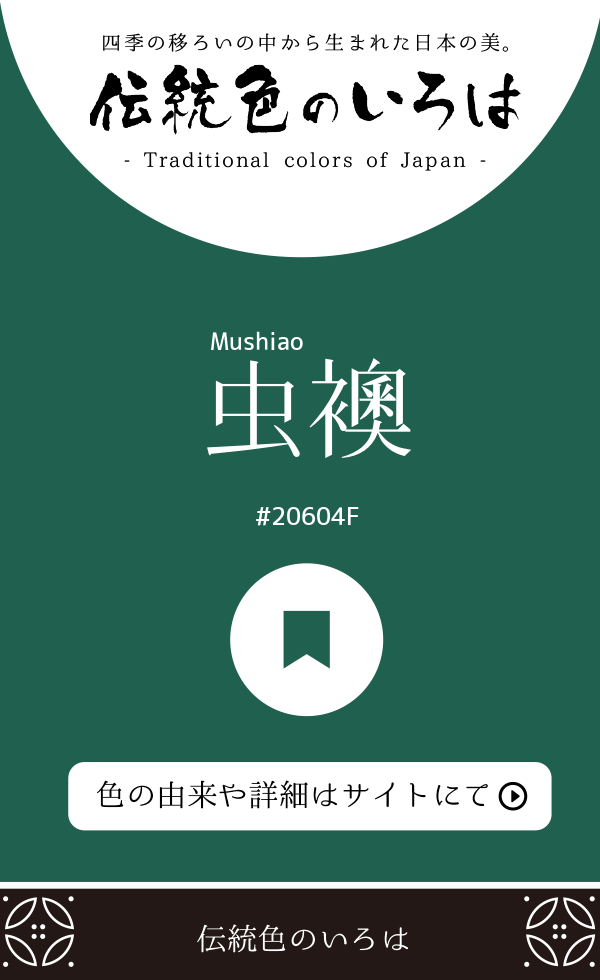
虫襖(むしあお)とは、タマムシ(玉虫)という甲虫の翅 のような暗い青みのある緑色のことです。表記としては『虫青』『蟲青』『蒸青』とも書かれ、『夏虫色』『玉虫色 』は同色とされています。
『虫襖 』の虫とはタマムシを指し、「タマムシの青」が色名の由来です。なお「貞丈雑記 」(一八四三)の解説によると、「襖 」の字が付く色はみな青味のある色であり「青」の字の代わりに用いたものと解説されています。
『虫襖』は襲の色目でもあり、鎌倉時代の装束 について解説した「雁衣抄 」(鎌倉時代末期)には「面 青黒ミアリ、裏 二藍 。叉薄色 。」とあり、「裝束雜事抄 」(一八二◯)には「面 青黒気アリ・裏 紫或ハ黄」とあって、表の色は「青黒」で現代で言うところの暗い緑色を使うことでタマムシの翅 の色を表現していました。
※襲の色目:衣の表裏や重ねによって色を表現する配色法。
『虫襖』の色名は、平安文学には見られず、「満佐須計装束抄 」(平安末期)に『虫青』の表記があるのみで、鎌倉時代の歴史書「吾妻鏡 」の注に「虫襖上下紅衣」とあることから『虫襖』は鎌倉時代以降の色といえるでしょう。
余談ですが、日本の伝統色の中で昆虫に関わる色名はいくつか見られるものの、昆虫そのものの姿や翅 の色に直接由来する色名は、『虫襖』や『玉虫色』『夏虫色』など、タマムシに関わるものにほぼ限られます。 その点において、『虫襖』は日本の色名の中でも、きわめて特異な存在といえるでしょう。

-読み:むしあお-
関連する色の紹介
[Explanation of a color]
Mushiao refers to a dark bluish-green color reminiscent of the wings of the jewel beetle (Tamamushi). The name is derived from the beetle itself, and the color is also written using various characters such as Mushi-ao, Chū-ao, or Jō-ao. It is generally regarded as the same color as Natsumushi-iro (Summer Insect Color) and Tamamushi-iro (Jewel Beetle Color).
In the name Mushiao, the word mushi refers specifically to the jewel beetle, meaning “the blue-green of the jewel beetle.”
According to Teijō Zakki (1843), colors that use the character ao (written as 襖 in this case) all indicate hues with a bluish tone, and this character was employed as an alternative writing for “blue.”
Descriptions of Mushiao appear in medieval costume manuals.
In Kariginu-shō, a Kamakura-period text on court attire, the color is described as having an outer layer of aoguro (blue-black) with an inner layer of futa-ai (double indigo) or usu-iro (pale color).
Similarly, Shōzoku Zatsujishō (early 19th century) records the color as “blue-black on the surface, with purple or yellow beneath.”
By using a dark greenish-blue tone on the outer layer, these combinations were intended to evoke the iridescent appearance of the jewel beetle’s wings.
Mushiao does not appear in Heian-period literary works.
Its earliest known attestations include the spelling Mushi-ao in Masasuke Shōzoku-shō (late Heian period), while a later annotation in Azuma Kagami mentions “mushiao garments worn over red robes,” suggesting that the color came into wider use from the Kamakura period onward.
As an aside, colors in Japanese tradition that are directly derived from insects are extremely rare.
Among them, Mushiao is particularly distinctive in that it, along with related colors such as Tamamushi-iro, takes its name from the jewel beetle itself rather than from an abstract association.
In this respect as well, Mushiao occupies a unique place within the corpus of traditional Japanese colors.
-read: Mushiao-
参考書籍
- 長崎盛輝『新版 日本の伝統色 その色名と色調』青幻舎 ISBN-10:4861520711
- 吉岡幸雄『日本の色辞典』紫紅社 ISBN-10:4879405493
- 内田 広由紀『定本 和の色事典』視覚デザイン研究所 ISBN-10:4881082035
注意事項
表示されている色(RGB値)は色の名前に対するおおよそものです。色名によっては広範囲の色を指す場合や文献・書籍等によっては解釈が異なる場合もありますのでご了承ください。 ご利用の環境によっては、色が適切に表示されていない場合があります。
印刷などに伝統色を利用したい場合は、DICグラフィックス株式会社から発売されている日本の伝統色シリーズがオススメです。
 DIC 日本の伝統色 第9版
Pinterestでシェアする際にご利用ください。
サイト運営者からのお願い
このサイトが気に入った、役に立ったと思われた方は、Amazon・楽天で買い物をする際はぜひ下記のバナーをタップしてからお買い物をお願いいたします。

こちらからお買い物をしていただきますと、価格の1%相当のポイントがサイトに入ります。もちろんその分、高くなるようなことはありません。
いただいたポイントは今後のサイト運営のための書籍代や運営費、モチベーションにつながりますので、ご協力いただけますと嬉しいです。


